



By reflecting the true health and value of assets, liabilities, and equity, they support a realistic assessment of financial standing. Accurate records prevent overstatement of assets and revenues, thereby aiding in sound decision-making; imagine knowing exactly how much those accounts receivable are truly worth, beyond optimistic contra expense estimations. Allowance for doubtful accounts is a contra asset account that is used to offset the balance of the accounts receivable account.
Create a free account to unlock this Template
A less common example of a contra asset account is Discount on Notes Receivable. The credit balance in this account is amortized or allocated to Interest Income or Interest Revenue over the life of a note receivable. To manage contra revenue effectively, focus on strategies that minimize these occurrences and enhance profitability. Refine your return policies to be clear yet reasonable, balancing customer flexibility with business protection. Also, optimize your discount strategies by offering them selectively based on customer segment or purchase behavior. Regularly review these policies and adjust based on data-driven insights to align with market conditions and customer expectations.
- A contra account is an account in the general ledger that offsets the balance of a related account, known as its paired account.
- /Allowance for doubtful accounts is netted from the accounts receivable balance.
- Contra accounts reduce the value of related accounts, ensuring more accurate financial reporting.
- If the frequency gets too high, you may decide to tighten your credit policies.
- If you debit the contra account, ensure that you offset the related account with a credit balance.
What is Contra Account?
- Contra accounts are confusing at first, but, with a little study, understanding them becomes second nature.
- Because profit margin is calculated using total revenue less total expenses, a contra expense will ultimately result in a higher reported profit margin than it would have been without the contra expense.
- This format shows original amounts, contra account balances, and resulting net values.
- This FAQ section addresses common questions surrounding the difference between contra expense and revenue accounts.
- For example, a company pays for medical insurance on behalf of its employees, which it records in an employee benefits expense account.
- You could explore comprehensive webinars and workshops focused on the nitty-gritty of contra accounts.
A specialized type of account exists to refine this reporting, ensuring the final expense figure reflects the precise net cost incurred. Contra accounts preserve the original purchase price of assets while simultaneously showing their current book value. These scenarios demonstrate how contra accounts work in typical business situations and accounting processes. As evident https://www.bookstime.com/ from the table below, each contra account has a parent account whose normal balance is often exactly opposite of the normal balance of the relevant contra account. Because profit margin is calculated using total revenue less total expenses, a contra expense will ultimately result in a higher reported profit margin than it would have been without the contra expense. Similarly, for long-lived assets, the gross cost minus the Accumulated Depreciation yields the asset’s current Book Value.
- In a report, layering on that additional context can be easy, but in a general ledger, you have few options for conveying nuance and subtlety.
- A technology firm receiving a state subsidy to cover 40% of its qualified Research and Development (R&D) payroll expense is a clear illustration.
- When you issue a note or bond at a price below its face value, use this contra account to reduce the carrying value of your liability.
- Contra accounts are used to record adjustments, reversals, or reductions in the value of assets or liabilities.
- The matching principle requires expenses to be recorded in the same period as related revenues.
Contra Accounts: Explained, Popular Types and Examples

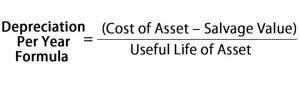
The company uses Straight-Line Depreciation to track the loss of value of the asset over time. Accounts receivable (A/R) has a debit balance, but the allowance for doubtful accounts carries a creditbalance. GAAP, the allowance for doubtful accounts represents management’s estimate of the percentage of “uncollectible” accounts receivable (i.e. the credit purchases from customers that are not expected to be paid). Contra expenses, being a negative expense, ultimately decrease a company’s profit or income. However, they can also help to offset the impact of regular expenses and can improve a company’s overall financial performance. This account is used when customers receive an allowance for damaged goods or when a price reduction is offered without a return.


One of the key strategies for companies to manage contra expenses efficiently involves conducting regular evaluations to identify areas where cost savings can be made and adjusting spending accordingly. By closely monitoring contra expenses and comparing them against budgeted projections, organizations can pinpoint inefficiencies and implement necessary changes to improve their financial performance. A company records $10,000 in gross revenue, but $1,000 worth of bookkeeping goods are returned. The business should subtract this as contra revenue and report a net revenue of $9,000. Similarly, if the parent account lists entries as debits, the contra account will appear as a credit. As your business acquires new assets (e.g., machinery, office equipment, vehicles), you record the initial purchase value in your Fixed Asset account.

- The balance sheet will show a gross fixed assets value, a contra account value for accumulated depreciation, and a net value.
- With expert guidance, you can strengthen your reporting and better protect your business’s financial health.
- Charlene Rhinehart is a CPA , CFE, chair of an Illinois CPA Society committee, and has a degree in accounting and finance from DePaul University.
- Sometimes, we have an ancillary balance whose normal balance is the same as that of the parent account.
- The general ledger is used to create financial statements such as the balance sheet and income statement.
- If a customer returns a product, the ‘Sales Returns’ contra revenue account lowers the total sales revenue, reflecting the true income.
If your allowances or discounts are out of step with industry norms, you might be either giving away too much or not enough to attract customers. For example, you might offer bulk purchase discounts to large buyers but limit early payment discounts to customers who have shown reliability in the past. Here are some practical ways to lower contra revenue, improve your discount strategies, and make sure your policies match industry standards. May lead to misunderstandings or misinterpretations of financial statements without proper explanation. Accounting software can simplify the management of and reporting from your ledger. With the appropriate level of automation integration in your chosen tool, you can pull the relevant values into these individual accounts directly from invoices, credit agreements, and other documentation.
Contra accounts are utilized across the Balance Sheet and the Income Statement to present a more accurate financial picture. Two frequently encountered examples exist in the asset section of the Balance Sheet. Understand the critical accounting mechanism that offsets balances to preserve historical cost and calculate net realizable value.

For example, accumulated depreciation, a contra asset account, reduces the book value of fixed assets, offering a more accurate depiction of their worth over time. When the account receivable is written off, it is added to bad debt expense on the income statement and placed in the contra account. If a company has a high or fast-growing allowance as a percentage of accounts receivable, keep a close eye on it. The contra asset account Accumulated Depreciation is deducted from the related Capital Assets to present the net balance on the parent account in a company’s balance sheet.